
Sword of Convallaria
XD Entertainment Pte LtdRole Playing
4.42.11K Reviews
- Version
- 2.10.0
- Installs
- 1.00M
- Age Rating
- Teen
Screenshots
Our Review of Sword of Convallaria
 Analysis by Appyee
Sword of Convallaria is the kind of role-playing game I recommend when you want tactical battles with a strong visual identity rather than another quick auto-battle session. I spent time with it as a free game from XD Entertainment Pte Ltd, and my first impression was that it asks for more attention than its store summary suggests. The swordplay is only one part of the experience: positioning, turn order, terrain, character roles, and the consequences of a decision all matter.
It is available for Android devices running at least Android 6.0, carries a Teen content rating, and has reached over a million installs. Its average score sits at 4.4 from roughly twenty-nine thousand ratings, which matches my overall feeling: there is a lot to like here, but it is not designed to please every role-playing fan. The free entry point is inviting, while the in-app purchases, ranging from $0.99 to $99.99 per item, make it important to understand what sort of commitment the game expects before you settle in.
A tactical adventure with more weight than a typical mobile RPG
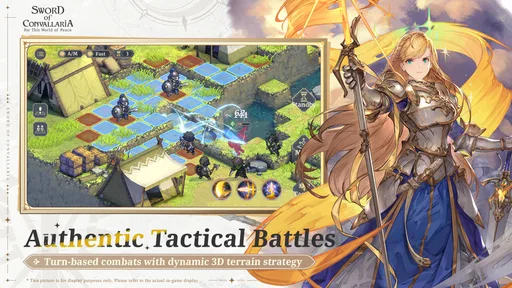
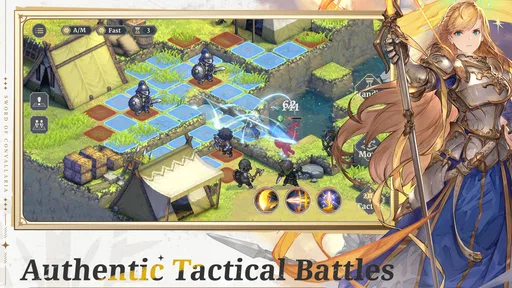
The central appeal is the battle system. Instead of simply choosing the strongest attack and watching a team clear a wave, I had to think about where each character stood, which enemy should be delayed, and whether a skill was worth spending immediately. A narrow path, a raised position, an explosive object, or an awkward corner can change the value of a move. That makes even familiar encounters feel more deliberate than the usual mobile routine.
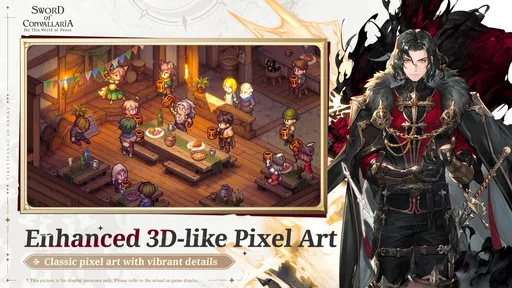
The presentation supports that slower pace. The pixel-inspired character work gives the game a classic strategy-RPG flavor, but it is not presented as a bare retro project. Characters have enough personality to make their roles memorable, and the overall look helps separate allies, enemies, and battlefield elements at a glance. I found that useful during crowded encounters, where readability matters more than decorative detail.
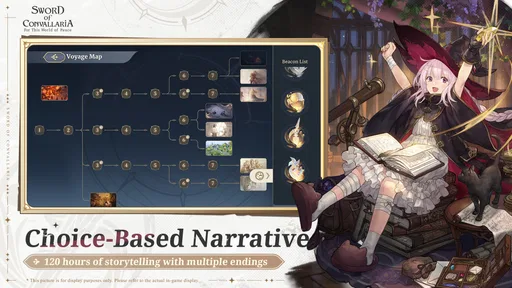
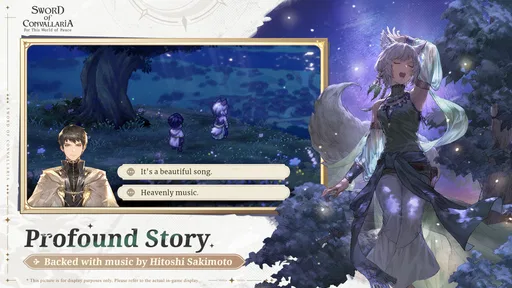
The story also tries to give the campaign a sense of consequence. Rather than treating every stage as an isolated fight, it frames the player as someone making choices in a troubled world. I enjoyed that ambition because it gives ordinary missions a reason to exist. At the same time, players who mainly want short combat sessions may find the narrative interruptions slower than expected.
Why the battles reward planning
My most useful adjustment was to stop treating every unit as a damage dealer. A character who blocks a route, pushes an opponent, applies a status effect, or protects a fragile ally can be more valuable than the unit with the largest attack number. The game becomes much easier to read once I consider each turn as a small puzzle instead of a race to remove enemies.
I also learned to inspect the battlefield before committing to a plan. It is tempting to move the strongest character forward immediately, especially when the opening looks safe. That often creates a problem later: the unit may be isolated, an enemy may gain access to the back line, or a useful environmental interaction may be lost. Taking a moment to identify escape routes and dangerous tiles is a simple habit that improves results without requiring a perfect roster.
The strongest part of the experience is the way positioning turns ordinary abilities into meaningful decisions. A skill that looks modest in a menu can become excellent when it interrupts an enemy’s route or creates space for another character. Conversely, a powerful ability used from the wrong place may solve nothing. This is where the game feels most like a proper strategy title rather than a collection of menus surrounding combat.
How the current version feels
The current version is 2.10.0, and I view that number less as a promise of a particular feature set than as a sign that the game has continued moving beyond its initial launch. That matters for a live role-playing game because early impressions can age quickly. Existing players are likely to care more about whether the present build feels stable and worthwhile than about what the game looked like when it first appeared.
My experience with the current build is best described as feature-rich but demanding. There is enough to occupy a player beyond a single evening, yet the amount of information can feel heavy when several systems open close together. Newcomers should not interpret every unlocked menu as something that must be mastered immediately. I made better progress by focusing first on the campaign, learning a small group of characters, and only then paying attention to deeper optimization.
That approach also reduces one of the game’s biggest sources of friction: the feeling that I might be wasting resources by making an imperfect choice. Early experimentation is useful, but endlessly rebuilding a roster can become distracting. I recommend selecting a balanced core team, recording which characters fill similar roles, and spending scarce materials only after seeing how a unit behaves in several different battle layouts.
What the release and ongoing development mean for players
The game was released on July 29, 2024. For someone joining after launch, that creates two different expectations. On one hand, the title has had time to establish its identity and refine its broader structure. On the other, a player entering now may encounter more systems and accumulated content than a day-one player did, which can make the opening feel less simple.
I would not judge it solely by the first few stages. The early portion teaches the basic language of movement and abilities, but the more interesting decisions appear when enemies begin forcing conflicting priorities. Protecting an objective, surviving a dangerous approach, and defeating a particular target are very different tasks even when they use the same roster. The game’s development is most valuable when it preserves that tactical variety instead of reducing everything to higher enemy statistics.
For returning players, the practical question is whether the current build gives their existing roster a reason to come back. My answer is cautiously positive if they enjoy revisiting tactical stages and refining execution. It is less convincing for anyone who wants a completely relaxed daily routine. The game rewards attention, and that remains true even when the player already understands the basics.
A realistic everyday session
Imagine I have twenty minutes after work. I can begin by checking the next campaign objective, adjust two positions in my team, and enter a battle with a specific plan rather than blindly pressing the recommended option. If the stage goes badly, I can identify the mistake: perhaps I exposed a support character, spent a control ability too early, or ignored a side route. That makes a short session feel productive even when I do not finish a large section of the story.
On a bus ride or during a break, however, I would be more cautious. Tactical battles are not ideal when I expect repeated interruptions, because losing concentration can lead to a poor turn and a frustrating restart. The game is better suited to a focused pause than to a few seconds of distracted tapping. That distinction is important: it feels like a compact strategy session, not background entertainment.
Progression, spending, and long-term comfort
Because it is free to download, the initial barrier is low. I could learn the combat loop without paying first, which is exactly how I think a game in this category should be approached. The presence of purchases from $0.99 to $99.99 per item means the financial side deserves attention, especially for players who are sensitive to collection pressure or who tend to buy impulsively when a difficult stage blocks progress.
My recommendation is to treat purchases as optional until the core loop has proved enjoyable. If the tactical battles already feel satisfying with a modest team, spending may enhance convenience or collection goals. If the combat itself is not appealing, buying more resources will not solve the underlying problem. I would also avoid spending simply because a new character looks useful on paper; a unit’s value depends on how well its role fits the maps and teammates I actually use.
There is a subtle trade-off here. A broad roster can make the game more interesting because different stages reward different approaches, but collecting and improving many characters can dilute resources. I had more fun when I built around a few dependable roles and added variety gradually. Players who enjoy optimizing every possible combination may appreciate the depth, while casual users may find the same depth turns into homework.
Where it stands beside other mobile role-playing games
Compared with a conventional action RPG, Sword of Convallaria is less about reflexes and more about reading the situation. I do not need to dodge in real time or repeat a combo until my hands remember it. That makes it a better fit for someone who enjoys board-game logic, turn-based planning, and character roles. It is a weaker choice for anyone seeking constant movement or immediate spectacle.
Compared with auto-battle-focused mobile RPGs, it gives me more control over the outcome. That control is also the cost. I cannot always rely on a team simply overpowering a stage while I look away. When I want a game that plays itself during a busy day, another option is more convenient. When I want my decisions to explain both victory and defeat, this one is much more satisfying.
It also differs from purely nostalgic pixel RPGs. The visual style may attract players who grew up with classic strategy games, but the structure is not just a short retro adventure. There is a larger progression framework to manage, and that can make the experience feel more like a modern mobile service than a self-contained old-school campaign. I enjoyed the blend, although purists may prefer something with fewer layers and no purchase-driven distractions.
Small habits that make a big difference
First, I recommend checking objectives before choosing a formation. A team designed to defeat enemies quickly may fail a protection or survival condition, while a slower control-focused group can complete it comfortably. This sounds obvious, but it is easy to forget when the game presents a familiar-looking battlefield.
Second, I save movement-based abilities for moments when they change the shape of the fight. Pushing an enemy away from an ally, opening a route around a blocker, or denying access to a vulnerable character can be more valuable than using the same ability for minor damage. This is one of the clearest ways to get more from a character without immediately chasing upgrades.
Third, I review failed battles as positioning problems before blaming character strength. A defeat can come from an exposed flank or badly timed skill rather than an underpowered team. Replaying with one altered opening often teaches more than replacing half the roster. That habit helps free players conserve resources and helps paying players avoid purchases made out of frustration.
Finally, I keep the team’s roles distinct. If every character is built to attack from the same distance and in the same way, the roster becomes less flexible than it appears. A durable front line, dependable support, and at least one character who can influence enemy movement give me more solutions when a map changes the usual rhythm.
Who should play it, and who should skip it
I would point this game toward players who like turn-based tactics, story-led fantasy, and the satisfaction of winning through a better plan rather than a faster tap. It is especially appealing if you enjoy experimenting with formations and noticing how terrain affects a battle. The Teen rating also signals that it is aimed at an older audience than a purely child-friendly casual game.
I would be more hesitant to recommend it to someone who wants a quick, uncomplicated mobile game. The menus, character development, and strategic choices can become a burden if the only goal is to relax for five minutes. It is also not my first suggestion for players who dislike free-to-play progression or who feel uncomfortable around a wide purchase range. Even if spending is avoidable, its presence can affect how the overall experience feels.
Players with older Android hardware should pay attention to the minimum operating-system requirement of Android 6.0, but compatibility alone should not be the deciding factor. The more important question is whether the device and the player can support focused sessions. This is a game where a clear screen, steady attention, and willingness to retry a stage are more valuable than simply having access to it.
What I would watch as the game continues
Looking ahead, I would watch how future updates balance new content with approachability. Adding more characters and systems can keep established players interested, but it can also make the first hours harder to understand. The best direction would be development that expands tactical possibilities while explaining them clearly and preserving the value of careful planning.
I would also pay attention to how new additions affect older teams. A healthy update should give existing characters and strategies reasons to remain useful, rather than making every previous investment feel temporary. That matters particularly for players who have spent time building a roster or money pursuing specific options.
For new users, the practical takeaway is simple: start free, learn the battlefield, and resist the urge to solve every difficulty spike with a purchase. For returning users, the question is whether the current version offers enough tactical variety to justify another stretch of play. In both cases, the answer depends more on enjoyment of deliberate combat than on the size of the content list.
After reviewing it, I see Sword of Convallaria as a thoughtful but occasionally demanding mobile role-playing game. Its best moments come when a modest tactical adjustment turns a losing battle into a controlled victory. Its weakest moments arrive when progression layers and spending options compete with that clean strategic core.
I would recommend giving it a fair trial to anyone who misses serious turn-based planning on a phone. Just approach it as a game that wants your attention, not as an idle companion. If that sounds appealing, the free starting point makes the decision easy. If you prefer instant action, minimal menus, or a game that never asks you to reconsider your formation, there are better alternatives. For me, the final verdict is positive: its battlefield decisions are strong enough to carry the experience, provided you accept the slower pace and manage progression with patience.
Verdict
Strengths of Sword of Convallaria
- Beautiful pixel-art visuals with detailed animations and atmospheric environments.
- Deep tactical combat rewards careful positioning, timing, and team composition.
- Multiple story routes and choices encourage replaying the campaign.
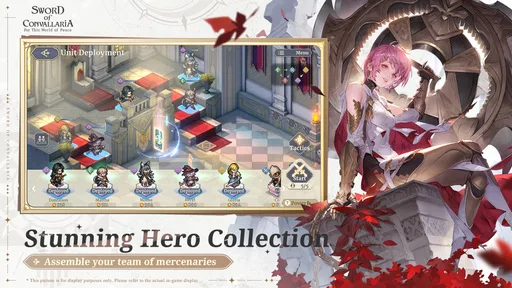
- A large roster offers varied roles, skills, and party-building possibilities.
- Frequent events and side content provide plenty to do beyond the main story.
Limitations of Sword of Convallaria
- Some battles can feel lengthy, especially when replaying familiar stages.
- Progression systems may seem overwhelming for players new to tactical RPGs.
- Gacha mechanics can make obtaining preferred characters unpredictable.
- Later content may require significant grinding or resource management.
- The mobile interface can feel crowded on smaller screens.
Other Releases by XD Entertainment Pte Ltd
View All
Etheria: Restart
Role Playing4.1
Similar Picks in This Category
View All
Hair Dye
CrazyLabs LTD4.4

Monster High™ Beauty Salon
CrazyLabs LTD4.5

Bus Simulator - Bus Games 3D
Jima Apps4.4

Flight Pilot: 3D Simulator
Wildlife Studios4.1


Super Stylist Fashion Makeover
CrazyLabs LTD4.4
Frequently Asked Questions
What is Sword of Convallaria, and what kind of game is it?
Sword of Convallaria is a tactical role-playing game for Android and iOS that combines grid-based, turn-based battles with a story-driven adventure. You command a team of characters, position them carefully, use terrain and environmental objects to your advantage, and make decisions that can influence the direction of the narrative. It is designed for players who enjoy strategy, character progression, fantasy worlds, and campaign choices rather than fast, action-focused combat.
Is Sword of Convallaria free to download and play?
Yes, Sword of Convallaria can be downloaded for free, although it includes optional in-app purchases. The game uses progression and recruitment systems that may encourage spending on resources, characters, or other bonuses. It is possible to enjoy the story and tactical gameplay without paying, but progress may require more patience if you avoid purchases. Parents should also review device payment settings before allowing younger players to download it.
Does Sword of Convallaria require an internet connection?
Sword of Convallaria is primarily an online game, so a stable internet connection is generally required for account access, updates, event content, cloud-related features, and much of the gameplay experience. Some menus or previously loaded content may remain accessible briefly without a connection, but it should not be treated as a fully offline RPG. Wi-Fi is recommended when downloading updates or playing for extended periods.
Is Sword of Convallaria suitable for beginners in tactical RPGs?
Sword of Convallaria is approachable for newcomers, but it still expects players to learn positioning, turn order, character roles, skills, and battlefield effects. Early missions introduce the main systems gradually, while later encounters become more demanding and may require team-building and careful planning. Players unfamiliar with strategy RPGs should take time to read ability descriptions, experiment with formations, and avoid relying only on powerful attacks.
What devices are needed to play Sword of Convallaria smoothly?
Sword of Convallaria is available on modern Android and iOS devices, but performance depends on the phone or tablet’s processor, memory, operating system, and available storage. Older or entry-level devices may experience longer loading times, reduced visual quality, frame-rate drops, or increased battery and heat usage. Before installing, ensure you have enough free space for the initial download and future updates, and use the latest supported system version.
Play our best games!


